Niagara College partners with Canada’s emergency responders robotics association
September 4, 2026
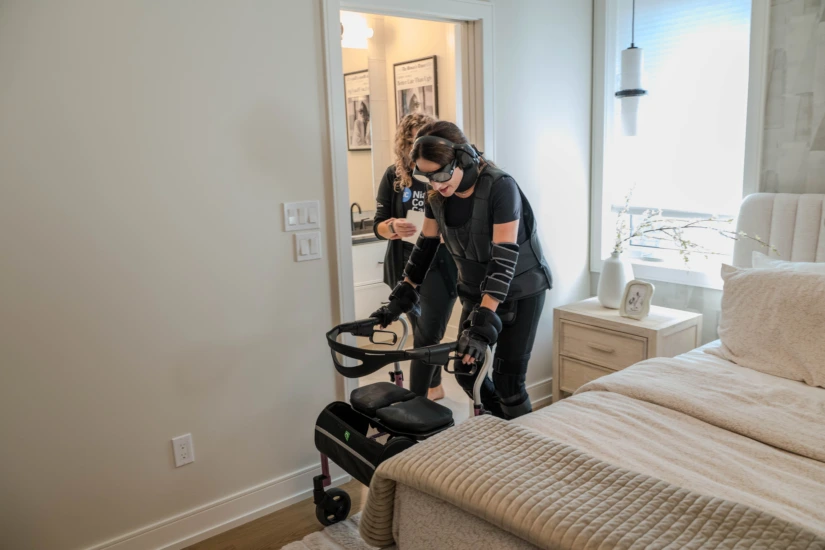
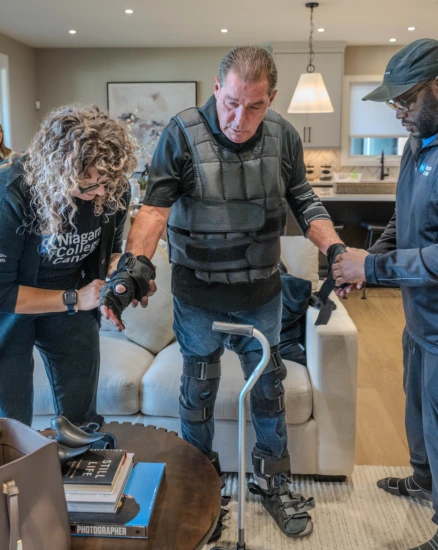
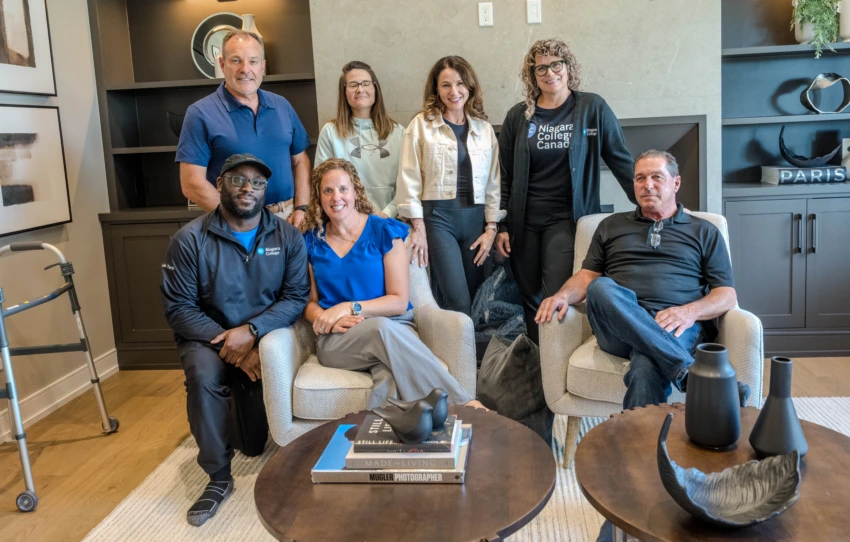
A new research study at Niagara College is putting home builders in the shoes of older adults. Members of the Niagara Home Builders Association (NHBA) wore aging simulation suits to experience first-hand the mobility and sensory challenges many people face later in life, and to explore how that experience can shape future housing design and renovation.
The study brings together two strengths of the College: its health simulation expertise, used to prepare students for real clinical situations, and its long partnership with local builders through the School of Trades.
What an aging suit does
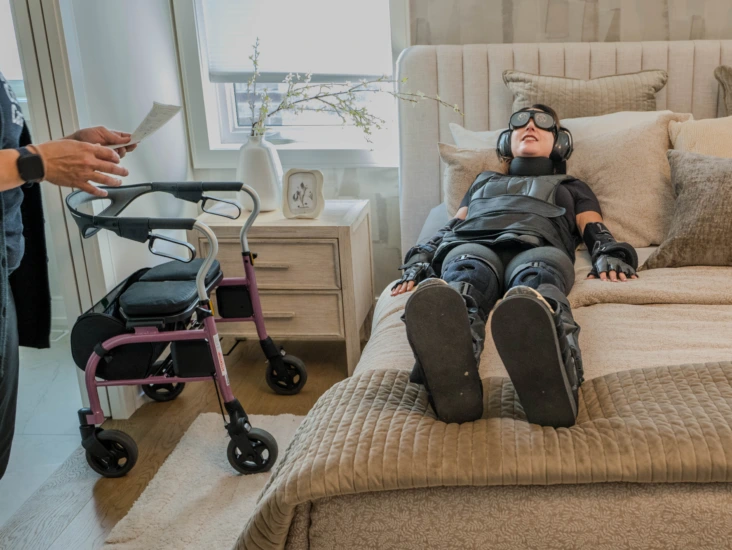
The suit uses weighted cuffs, resistance straps and a neck brace to mimic muscle weakness, stiffness and reduced dexterity, simulating conditions such as arthritis and sarcopenia. Special goggles reproduce degenerative eye conditions, and headphones recreate hearing loss.
NHBA CEO Chuck McShane wore a suit set up to simulate a left-sided stroke with vision loss. He then completed daily activities: getting out of bed, using the stairs, picking items up from the floor and taking medication. Other participants experienced sarcopenia with restricted neck movement, or the breathing difficulties associated with COPD.
Designing homes for every stage of life
“Aging in place is about more than accessibility; it’s about giving homeowners the ability and dignity to remain in the homes and communities they love,” said McShane.
Builder Ed Lucchetta, whose active-adult community in Welland hosted the pilot, noted that wider doorways, accessible layouts, main-floor living and adaptable bathrooms can be built into a home without compromising its style.
Building empathy in future healthcare workers
The same suits are part of everyday learning for students in Nursing, Personal Support Worker, Massage Therapy, Community Services and Justice and Fitness programs. “These simulations help students step into their future patients’ experiences, building empathy and appreciation for the person behind the patient,” said Professor Alison Cousineau of the Myhal School of Nursing.
The findings will be shared at the Ontario Homebuilders Conference and at the Niagara Health Knowledge Institute Research Day. The College is also exploring ways to extend the study to paramedics, occupational therapists and other professionals who provide care in patients’ homes.
Photo gallery